
Founder Wellbeing
Thriving founders build a thriving world.
The entrepreneurs shaping our future deserve more than survival. We invest in the full spectrum of founder health — and transform what they create.
The entrepreneurs shaping our future deserve more than survival. We invest in the full spectrum of founder health — and transform what they create.
"I know my founders' wellbeing is critical, but I have no idea what works, what's appropriate, or where to start."
There are two problems to solve:

The estimated economic value of proactive investment in brain health — and a potential 12% increase in global GDP.
Based on the Entrepreneur Wellbeing Check developed by Dr. Michael Freeman & Econa
Meet every founder where they are. Mental health support for those who need it. Peak performance training for those ready for it. A culture shift for everyone.
One founder at a time. One firm at a time. One organization at a time — until the culture of entrepreneurship itself shifts.
Whether you're a founder seeking support, an investor wanting to do right by your portfolio, or an organization serving entrepreneurs — there's a way in.
You're building something — and you want to understand where you sit on the spectrum from surviving to thriving. Whether you're VC-backed or bootstrapped, the first step is the same: know where you are.
You're a VC, accelerator, family office, or corporate partner. You care about your founders' wellbeing — and you want to de-risk your portfolio while leading with your values.
You run a community, membership organization, university program, or accelerator serving entrepreneurs. Your members are building under pressure — and you want to give them real tools for the journey.
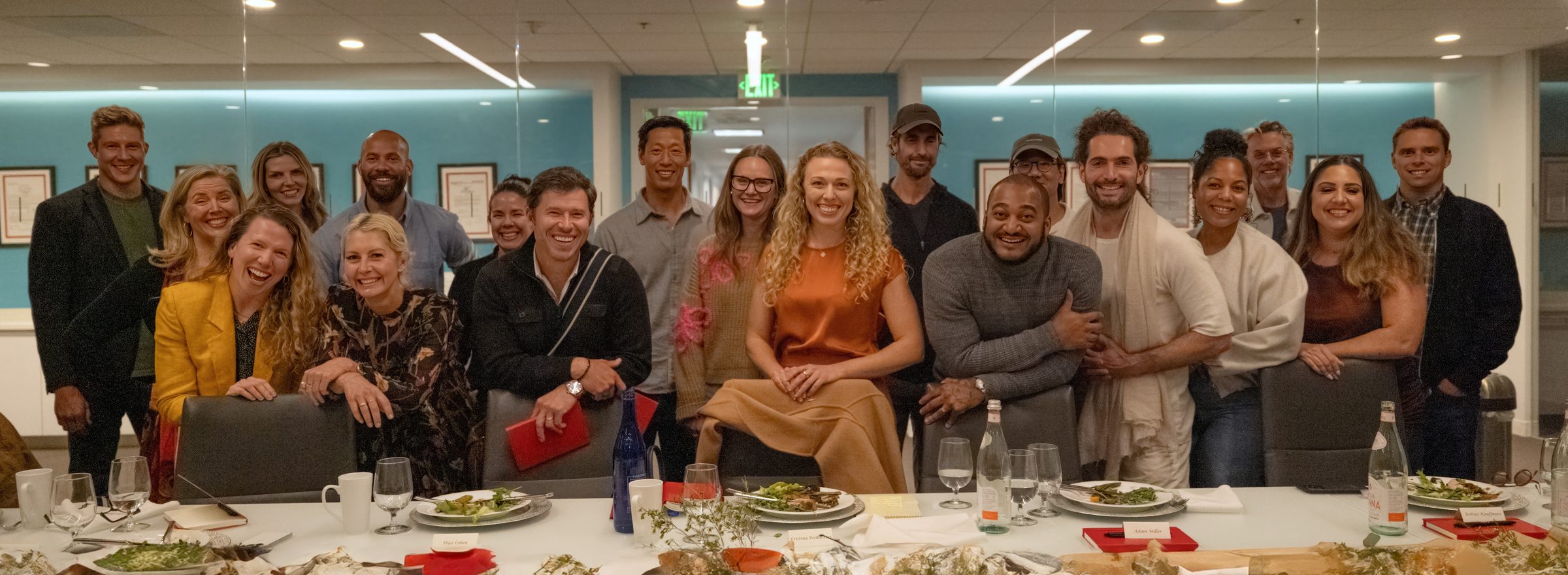
In 2025, I partnered with the Founder Mental Health Pledge, Cooley LLP, M13 Ventures, and Microsoft for Startups to host an intimate dinner in Los Angeles — bringing investors and founders together for a real conversation about wellbeing. No panels. No pitches. Just depth.
That's often the first step: an event that shifts the conversation inside your organization.
The Entrepreneur Wellbeing Check (EWC) is a validated, 7-question screening developed by Dr. Michael Freeman and the team at Econa. It takes about 2 minutes and gives you a snapshot of where you sit on the continuum — from surviving to thriving. Your total score ranges from 0 to 28.
Your results are completely confidential. We don't store your answers, and your score is never shared with anyone.
Your results are shown on the next screen and are completely confidential. Your individual score and answers are never shared with anyone.
This screening is not intended as a substitute for professional medical advice, diagnosis, or treatment.
The Entrepreneur Wellbeing Check (EWC) was developed by Michael A. Freeman, M.D., Amelie Mazza, M.A., Sheri L. Johnson, Ph.D., and Adrienne Heinz, Ph.D.
Part of Econa's FounderScreen Initiative.
If you are in crisis, please contact the 988 Suicide & Crisis Lifeline (call or text 988).
Through Dolce Vita Ventures, I partner with organizations to build founder wellbeing infrastructure — from a single conversation to a fully managed program. Most start with an event.
Start Here
A dinner, keynote, or 30-minute discovery call. Open the conversation, build alignment, understand where your founder population sits.
Get started →Phase 1
Validated wellbeing assessments across your founder population using the Entrepreneur Wellbeing Check. Data you can see and act on.
Phase 2
Bespoke programming matched to your organization's size, budget, and culture — spanning mental health support to peak performance. Network of 30+ vetted practitioners.
Phase 3
Track what's shifting, demonstrate ROI, evolve the program. Lightweight retainer or fully managed.
The need: 72% of founders report mental health challenges, yet 56% say they receive zero support from their investors. Founder burnout is a portfolio risk — and the data shows it.
The ROI: Heads of Platform are often the champion here — this is exactly the kind of differentiated infrastructure they're hired to build. It de-risks your portfolio, reduces founder turnover, and signals to founders that you see the whole picture. Firms with wellbeing programs report stronger founder retention and deal flow.
The need: Law firms, banks, and platforms serve thousands of founders — but the relationship is often transactional. Founders are increasingly choosing partners who understand what they're going through, not just what they're building.
The ROI: Wellbeing programming is a genuine client differentiator — one that builds loyalty, deepens relationships, and positions your firm as a thought leader. It's also a compelling reason for founders to show up to your events.
The need: 76% of founders report feeling lonely — seven times the workplace average. Your members are carrying more than they share. Bringing in a speaker who names this openly — with data and credibility — creates the kind of moment that defines a community.
What this looks like: Invite me to deliver a keynote, lead a dinner conversation, or run a facilitated session with your members. I bring the research, the frameworks, and the lived experience of working with hundreds of founders — and I make it safe to have the conversation that your community needs but hasn't had yet.
The ROI: Members who feel genuinely seen renew. They refer. They become evangelists. Wellbeing programming is one of the most tangible ways to deliver on the promise of belonging — and it gives your community something real to talk about.
The need: Only 3.6% of founders say they receive significant mental health support from investors. This isn't a founder problem — it's an investor education gap. Communities that serve VCs, PEs, and LPs are uniquely positioned to close it.
The ROI: Helping your investor members understand founder wellbeing makes them better board members, better partners, and better fiduciaries. It's also a timely differentiator for your programming.
The need: There are 36.2 million entrepreneurs in the US. Only 55,000 are VC-backed. The vast majority — students, solo founders, early-stage builders — have no access to wellbeing infrastructure. Institutions with scale can change that.
The ROI: Entrepreneurship programs that integrate wellbeing see better outcomes, more resilient founders, and stronger alumni engagement. It's the curriculum gap that everyone can feel but few are filling.
.png)




A 30-minute conversation is enough to understand where your founder population sits and what a first step might look like. No pitch. No obligation.